New stock Arrived | FREE shipping on orders $199+

Motorcycle Mechanic's Essential Tool Kit: What's Different From Car Tools
Grab a car mechanic's toolbox and hand it to someone working on a motorcycle, and they'll find a lot of tools they simply can't use. Bikes aren't just smaller versions of cars — they're built with different fasteners, tighter clearances, and access points that call for a completely different approach. Here's what actually changes when you swap from car work to motorcycle work, and what belongs in your tool kit either way.
Smaller Drive Sizes Do Most of the Work
Car mechanics lean heavily on 1/2" drive tools for anything structural — wheel bolts, suspension components, engine mounts. On a motorcycle, that same 1/2" drive is often too bulky to fit, and most of the fasteners don't need that much torque anyway.
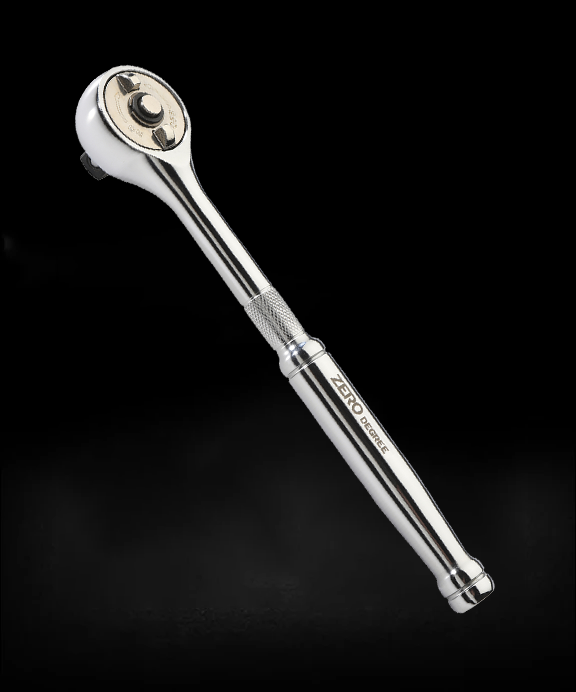
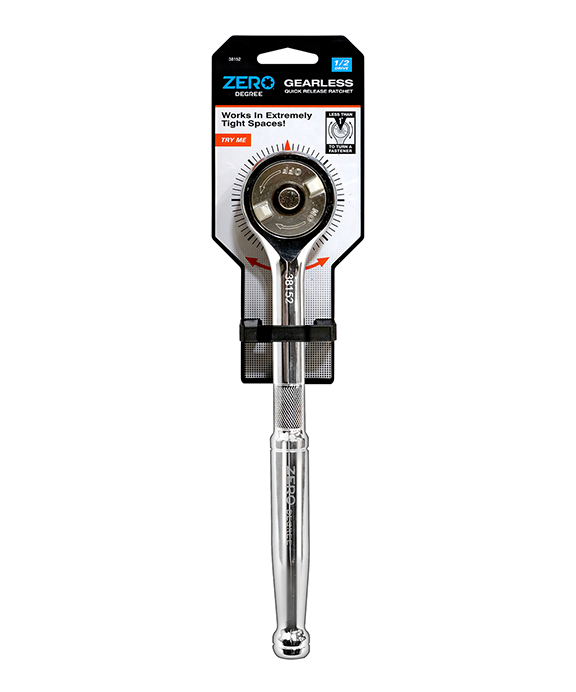
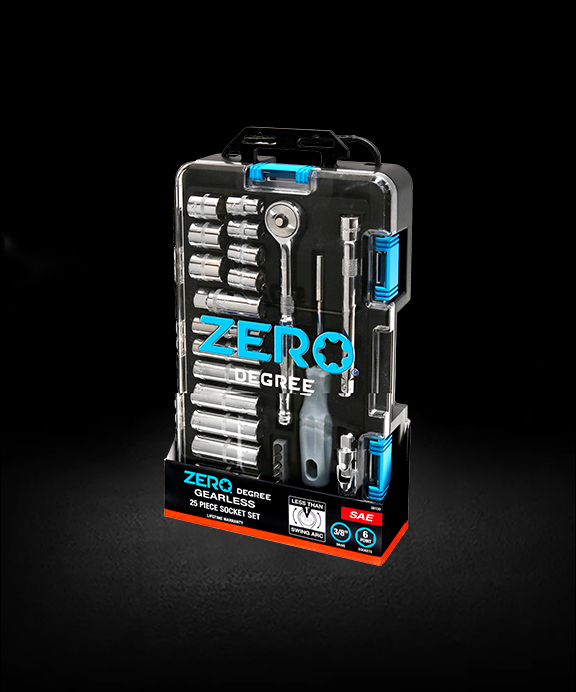
A motorcycle tool kit is built around 1/4" and 3/8" drive ratchets and sockets. The 1/4" drive handles the small fairing bolts, switchgear, and electrical covers, while 3/8" covers everything from engine covers to most wheel axles. A 1/2" drive still earns a place in the kit for larger axle nuts and some swingarm bolts, but it's the exception rather than the default. A gearless ratchet in these smaller drive sizes is worth prioritising too, since bike fasteners are often set in recesses where a geared ratchet's wider swing arc simply won't fit.
Metric Sizes Dominate, With Fewer Exceptions
Cars — especially older or American-made ones — still turn up with a mix of metric and SAE fasteners. Motorcycles are far more consistently metric, regardless of the country they're built in. A dedicated motorcycle kit can usually skip a full SAE set entirely and instead go deep on the metric sizes that see the most use: 8mm, 10mm, and 12mm sockets and spanners get far more wear than anything else in the roll.
Access Beats Size
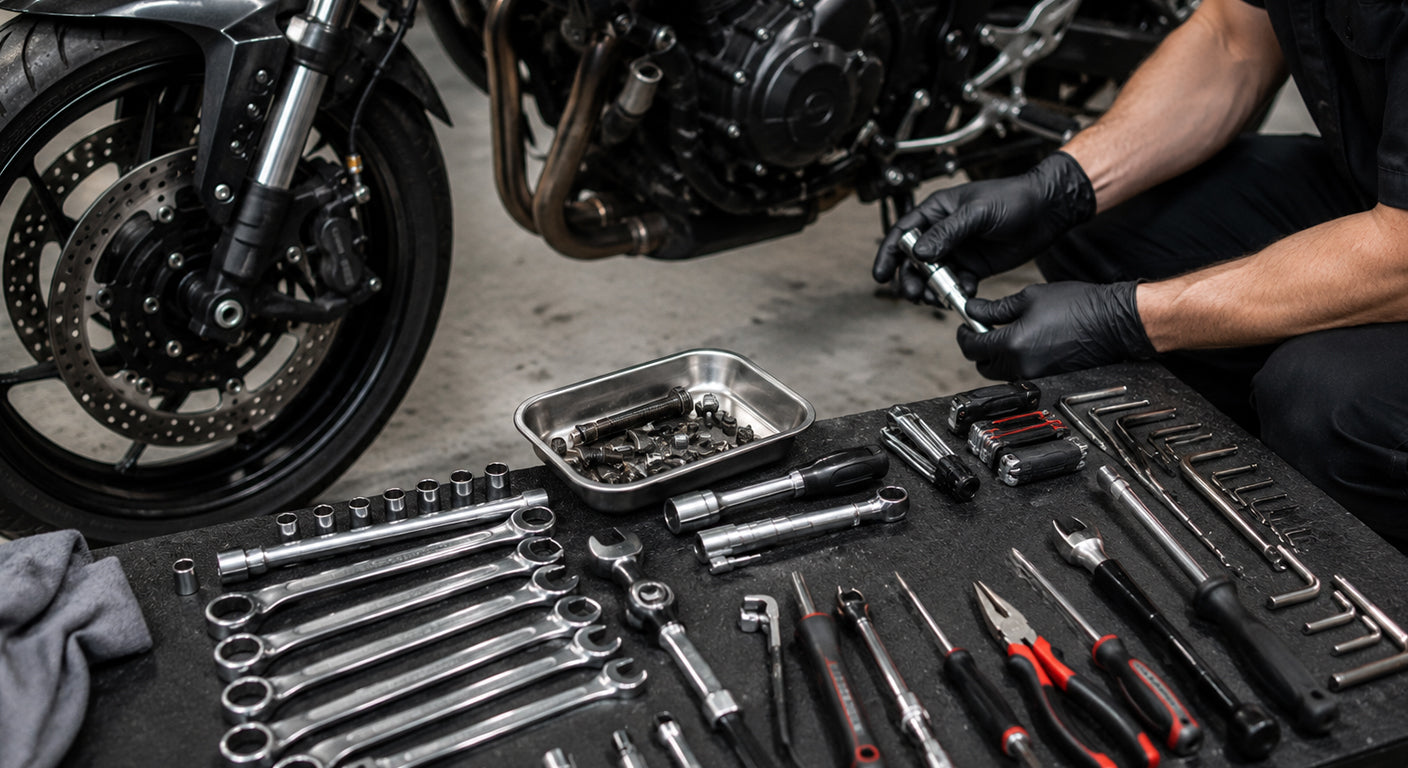
Car engine bays are cramped in their own way, but motorcycles take tight clearance to another level. Fairings, frame rails, and closely stacked components mean a standard rigid spanner often can't get the swing arc it needs, even when the bolt itself is easy to reach with a socket.
This is where flex-head or interchangeable spanner sets earn their place in a bike kit far more than in a car kit. Being able to angle the head around a frame tube or fairing bracket, rather than needing a full sweep of clearance, is often the difference between removing a panel cleanly and scratching it up trying to force a rigid tool into place.
A gearless ratchet helps for the same reason — with less than a degree of swing arc needed per stroke, it works in gaps too tight for a geared ratchet to even complete one click.
Torque Values Are Lower, But Precision Still Matters
Motorcycle fasteners generally take considerably less torque than equivalent car bolts, since the components they're holding are lighter and thinner. This doesn't mean torque accuracy matters less — if anything, it matters more. Overtightening a small motorcycle bolt strips the thread almost instantly, since there's less material to absorb the mistake compared to a heavier car component.
A 1/4" drive torque wrench, rather than the 3/8" or 1/2" wrench most car kits are built around, is the more useful addition here for hitting the lower torque figures motorcycle fasteners typically call for. Running a gearless ratchet for the initial spin-down before switching to the torque wrench also reduces the risk of overshooting, since there's no backlash or slack to misjudge on the last turn or two.
Specialty Tools You Won't Find in a Car Kit
A few tools show up in motorcycle kits that rarely appear on the car side at all:
-
Chain breaker and riveting tool — for servicing or shortening a drive chain, something cars don't have
-
Spoke torque wrench — for wire-spoked wheels, keeping spoke tension even
-
Fork seal driver — sized specifically to the fork tube diameter, with no car equivalent
-
Steering stem wrench — for adjusting or removing the steering head bearing preload
Building a Kit That Fits the Job
A solid motorcycle-specific kit generally includes:
- 1/4" and 3/8" drive gearless ratchets , with a 1/2" drive kept aside for axle work
- A deep metric socket set covering 6mm through 19mm
- A flex-head or interchangeable spanner set for tight fairing and frame access
- A 1/4" drive torque wrench for smaller fasteners
- Bike-specific tools: chain breaker, spoke wrench, and fork seal driver as needed
Car tools aren't wasted money if you work on both, but treating a motorcycle like a smaller car under-equips you for the access problems bikes create. Build around drive size and reach first — starting with a gearless ratchet in the right sizes — and the rest of the kit falls into place from there.
Leave a comment