New stock Arrived | FREE shipping on orders $199+

How to Store Spanners Properly to Prevent Rust and Loss
Ever gone to grab the 13mm from your spanner set and ended up digging through a drawer full of mismatched tools, half of them rusted, half of them missing entirely? You're not alone. A lot of people spend good money on a quality spanner set, only to watch it fall apart within a year or two — not from use, but from bad storage habits.
The truth is, how you store your spanner set matters almost as much as the quality of the tools themselves. Here's how to actually protect your investment and stop losing pieces every time you need them.
Why Spanners Rust Faster Than People Expect
Most people assume rust only happens outdoors or in obviously damp conditions. But a spanner set sitting in a garage, shed, or even an unventilated toolbox can pick up moisture from humidity, temperature swings, or condensation without you ever noticing it happening.
Metal doesn't need to get visibly wet to start corroding. A subtle layer of moisture in the air, combined with time, is enough to slowly eat away at the surface finish — especially on lower-grade steel. Even a good chrome vanadium spanner set can develop surface rust if it's left in the wrong environment for long enough.
The Real Reason Spanners Go Missing
It's rarely theft. It's almost always poor organisation. When a spanner set is stored loosely in a drawer, a bucket, or tossed into a bag with other tools, individual pieces get buried, misplaced, or accidentally left on a workbench mid-job. Once a set loses even one or two sizes, its usefulness drops dramatically — suddenly you're missing the exact size you need most often.
Store Your Spanner Set in Its Original Case (If Possible)
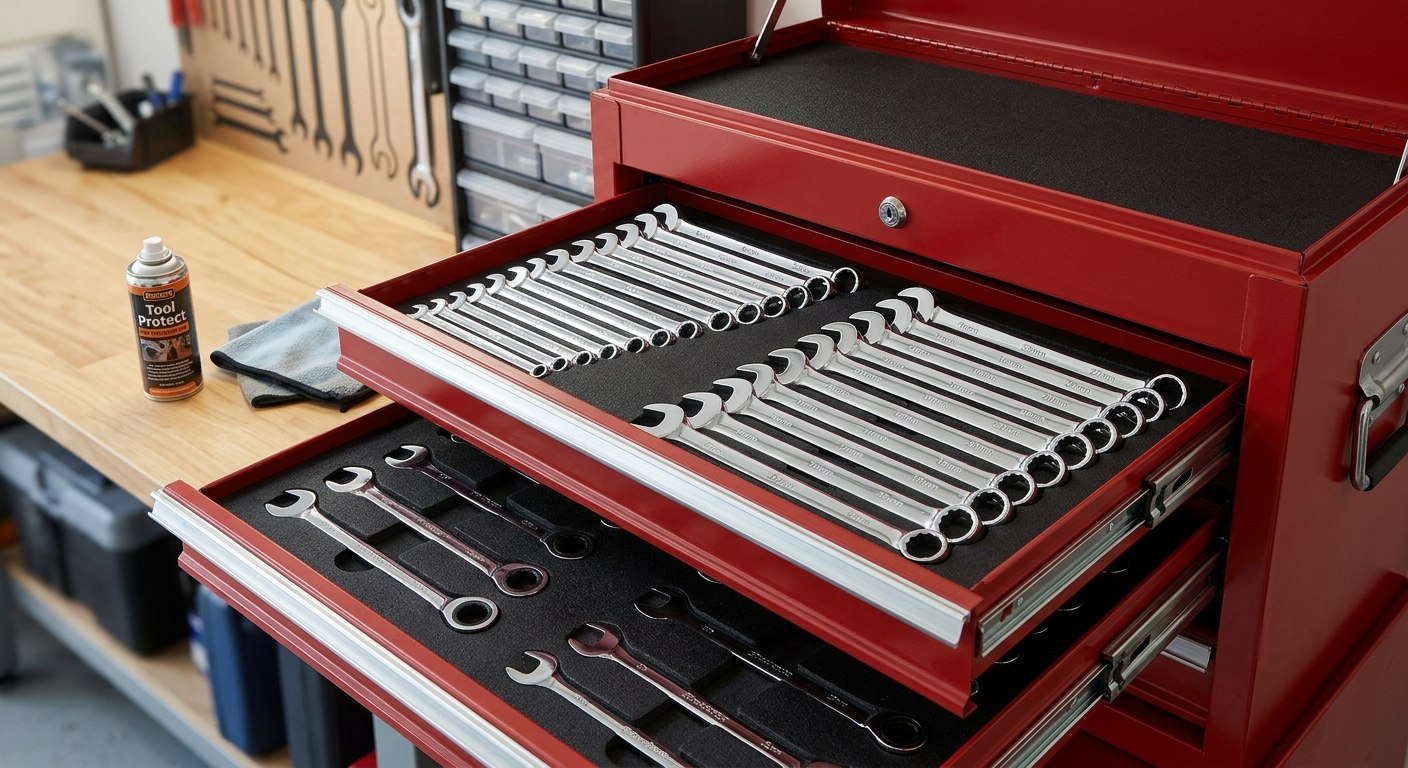
This sounds obvious, but it's the most overlooked solution. Most spanner sets come with a moulded case or tray specifically designed to hold each size in its own slot. This does two things at once: it keeps every piece accounted for, and it reduces metal-on-metal contact, which is one of the sneakier causes of surface scratches and finish wear over time.
If the original case gets damaged or lost, a simple tool roll or a foam-insert toolbox tray works just as well. The goal is the same — give every spanner in your set its own dedicated space.
Keep the Environment Dry, Not Just the Tools
Wiping down a spanner set after use helps, but it's only half the job. The environment they're stored in matters just as much. A few practical habits make a real difference:
Add moisture absorbers — Small silica gel packs placed inside your toolbox or drawer quietly soak up excess humidity before it reaches your tools.
Avoid storing near concrete floors — Concrete holds moisture and releases it slowly into the air, which is exactly why tools stored in garages on low shelves rust faster than those kept higher up or in sealed containers.
Ventilate enclosed storage — If your spanner set lives in a sealed metal toolbox, trapped humidity has nowhere to go. Occasionally opening it up to let air circulate helps more than people expect.
A Light Coating Goes a Long Way
After cleaning your spanner set, a thin layer of protective oil — even something as simple as a light machine oil or a dedicated rust inhibitor spray — creates a barrier against moisture. You don't need to soak the tools, just enough to leave a light film across the surface. Wipe off any excess so it doesn't attract dust and grime the next time you reach for them.
This one habit alone can add years to the life of a spanner set that would otherwise start showing rust spots within a single damp season.
Organise by Size, Not by Random Order
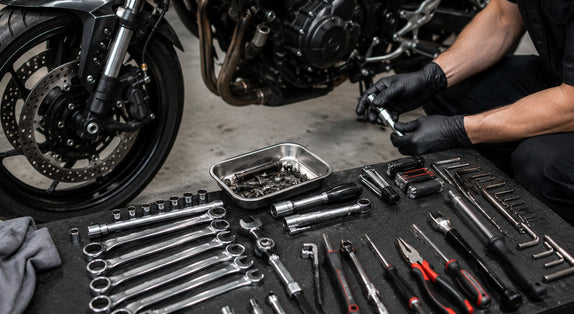
A surprising number of lost pieces happen simply because people can't quickly tell what's missing. If your spanner set is arranged randomly, a missing 10mm might not get noticed until you're mid-job and it's too late. Arranging your set in ascending size order — whether in a case, on a wall-mounted rack, or in a drawer organiser — makes it immediately obvious when something's not where it should be.
Consider a Wall-Mounted or Magnetic Storage Option
For those who use their spanner set frequently, a wall-mounted tool rack or magnetic strip keeps everything visible and instantly accessible. This isn't just about convenience — visibility is one of the simplest ways to prevent loss. If a spanner isn't hanging back in its spot, you'll notice immediately, rather than realising three jobs later that a size has gone missing.
Avoid Mixing Your Spanner Set With Other Tools
It's tempting to just toss everything into one big toolbox, but mixing a spanner set with heavier tools like hammers, pliers, or sockets increases the risk of dents, scratches, and finish damage from constant knocking around. Keeping your set in its own dedicated space — even a simple designated drawer — reduces wear and makes the tools easier to find when you actually need them.
A Quick Storage Checklist
- Keep your spanner set in its original case, tray, or a dedicated tool roll
- Add moisture absorbers in enclosed storage areas
- Apply a light protective oil coating after cleaning
- Store above ground level, away from concrete floors
- Arrange sizes in order for quick visual checks
- Avoid mixing with heavier, loose tools
Final Thought
A spanner set isn't just a one-time purchase — it's a tool collection meant to last for years if it's looked after properly. Rust and lost pieces aren't really about bad luck; they're almost always the result of storage habits that seemed fine at the time but quietly caused damage over months or years. A few small changes to how and where you store your spanner set can be the difference between a toolkit that lasts a decade and one that needs replacing every couple of years.
Leave a comment