New stock Arrived | FREE shipping on orders $199+

The Flat-Rate Mechanic’s Secret Weapon: How to Conquer Tight Spaces and Stop Scrambling Your Knuckles
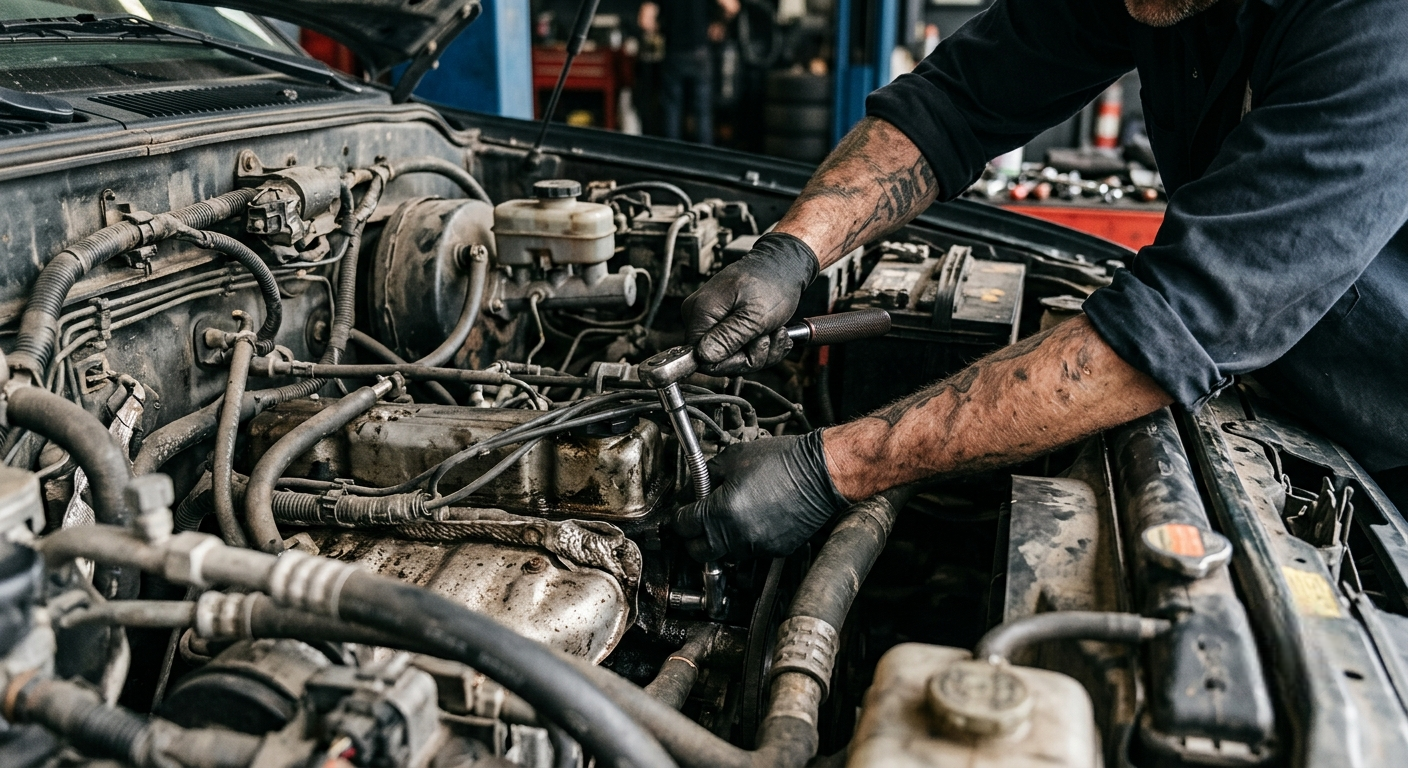
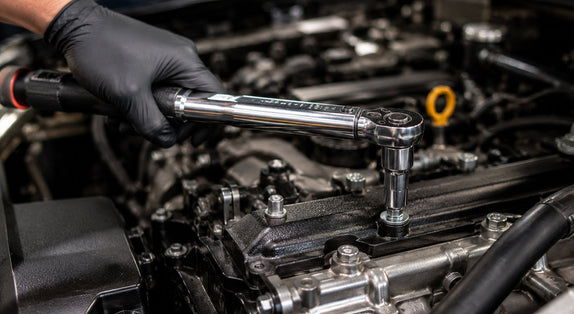
Every modern technician understands the struggle. You find yourself deep in a cramped engine bay, your hands covered in grease, staring at a crucial fastener hidden among coolant lines, wiring harnesses, and firewall plastic.
You place your standard ratchet onto the bolt head, pull back to turn it, and... click. Nothing happens. There isn’t enough space for even a single click from a traditional geared mechanism. You try again, but the wrench slips, and your hand crashes into a sharp bracket, causing you to yell at the car.
If you are wasting time, rounding off bolt heads, and injuring your hands on every tight job, it’s not a skill issue; it’s a tool problem.
This is the real cost of struggling with outdated tools. High-precision engineering can save you 5 minutes on every stubborn fastener.
1. How to Remove a Fastener When You Have Zero Room to Swing
Modern cars are built for assembly lines, not repair shops. Components are packed tighter than ever, leaving almost no room for tool movement.
When you use a standard 72-tooth ratchet, you need at least a 5-degree swing arc to engage the next tooth. If the space only allows for 3 degrees of movement, your wrench is useless. You have to start taking apart perfectly good parts just to make room for your tools, turning a 20-minute job into a 2-hour headache.
The Gearless Fix
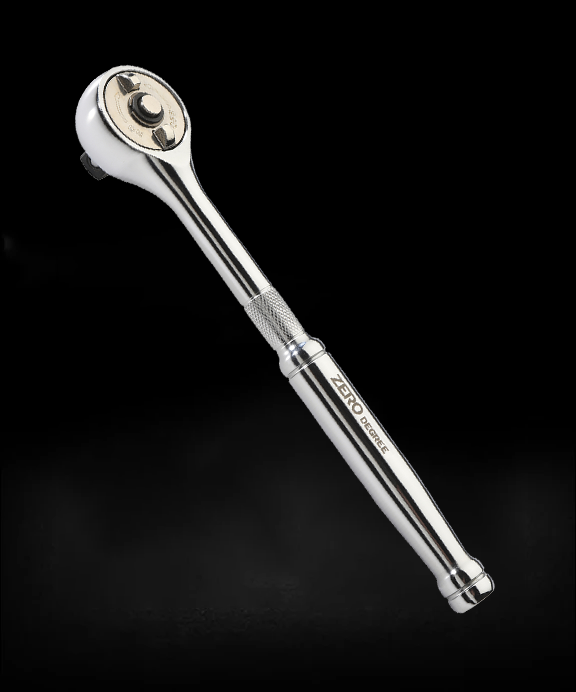
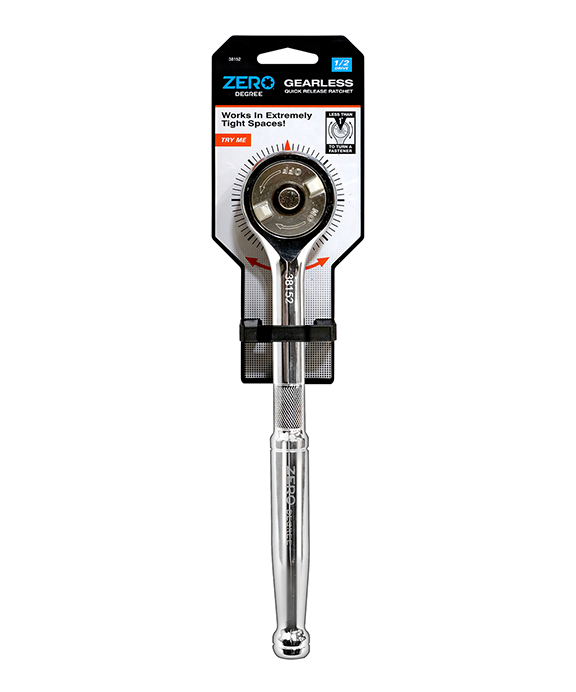
To survive in these tight spots, you have to remove the teeth completely. By using a gearless magnetic drive or roller-clutch system, the swing arc reduces to zero degrees.
The Zero Arc Advantage:
If you can move the handle even a millimeter, you are turning the fastener. There’s no slop, no dead zones, and no wasted motion.
2. Saved Knuckles and Screaming Matches: The True Cost of Cheap Hand Tools
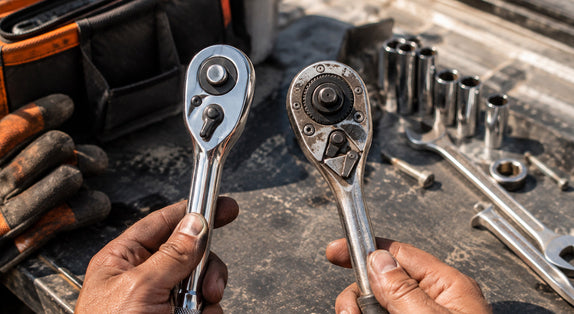
Cheap tools may look nice in their plastic cases, but they show their real cost as soon as you apply real force.
Cheap Tools = Stripped Gears, Slipped Grips, Wasted Time, Destroyed Knuckles
When a low-quality internal pawl slips under stress, your hand can suddenly fly into the nearest metal object. This causes pain, but there’s more. Cheap tools also have severe back-drive. This means that when you try to loosen a bolt that’s loose or greasy, the internal friction of the ratchet is stronger than the resistance of the bolt. Instead of clicking back, the tool just spins the bolt right back into place.
Investing in low back-drive mechanics allows the wrench to move smoothly while the fastener stays in place. This saves your energy and keeps your skin safe.
3. Rounding Off? How Precision Tolerances Stop Drilled-Out Fasteners
Nothing disrupts a profitable flat-rate day faster than a rounded bolt head. Once those corners are gone, you will need extractors, torches, or a drill to remove the stud.
Most people blame rust, but the real issue is often poor tool tolerances. Inexpensive sockets and wrenches have loose internal dimensions. When you apply high torque, a loose wrench transfers the force away from the flat sides of the hex head and focuses it directly on the weak corners.
[Loose Tool Fit] → [Pressure on Corners] → [Metal Shears] → [Rounded Bolt]
High-quality tools are designed with very tight tolerances and unique internal shapes, like off-corner loading. By making contact slightly away from the exact points of the hex, the tool spreads the crushing force evenly across the strongest flat faces of the fastener. Even if a bolt is already a bit damaged, a precision tool grips firmly without stripping the metal.
4. Why Polished Chrome-Vanadium is More Than Just a Pretty Finish
It's easy to look at mirror-polished Chrome-Vanadium (Cr-V) and think it's just for vanity. But in a professional workshop, that flawless finish is structural security.
|
Feature |
Low-Grade Matte/Satin Finish |
High-Polished Chrome-Vanadium |
|
Micro-Pores |
Rough texture traps brake dust, salt, and moisture. |
Ultra-smooth surface sheds liquids effortlessly. |
|
Corrosion Resistance |
Prone to pitting and hidden rust underneath the surface. |
Highly resistant to chemical degradation and rust. |
|
Clean-Up Time |
Requires heavy scrubbing to remove embedded grease. |
Wipes clean instantly with a single pass of a shop rag. |
|
Structural Defect ID |
Hides hairline fractures until the tool breaks under load. |
Flaws and stress fractures are easily visible before failure. |
A mirror finish ensures that corrosive fluids like brake cleaner, old oil, and road salt can't find a foothold to weaken the underlying steel alloy, keeping the tool strong for a lifetime of heavy use.
Stop Fighting Your Tools. Make Every Second Count.
Time is the only asset a mechanic can't buy back. Every minute spent battling back-drive, looking for a ratchet click, or searching for a bolt extractor is money flying right out of your toolbox.
Upgrading to zero-degree gearless technology and precision-machined hand gear is not a luxury; it’s a necessity that transforms frustrating, knuckle-busting jobs into a simple task.
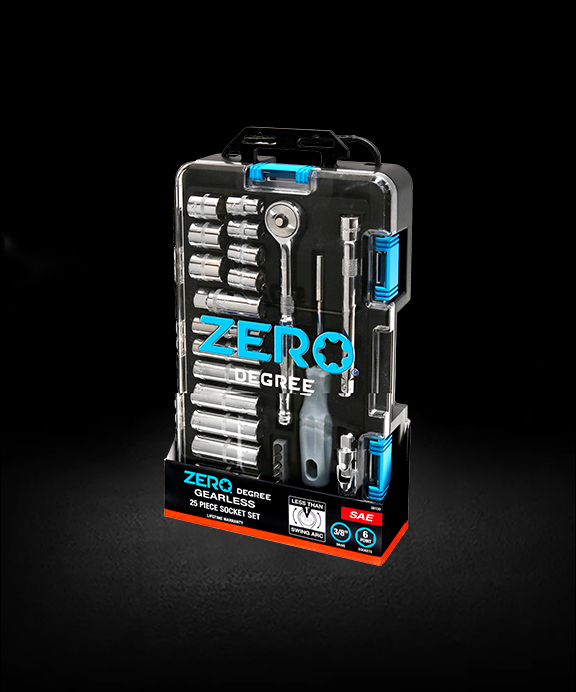
Ready to experience zero slop and maximum speed? Check out the engineered gearless line at Zero Tools.
Leave a comment