New stock Arrived | FREE shipping on orders $199+

What Causes Ratchets to Slip?
There's nothing more frustrating than putting your weight into a bolt, only to feel the ratchet skip and your knuckles go straight into the nearest panel. If your ratchet spanner keeps slipping instead of turning, it's rarely bad luck—it's almost always one of a handful of mechanical issues. Here's what's actually going on, and how to sort it out.
1. Worn or Damaged Gear Teeth
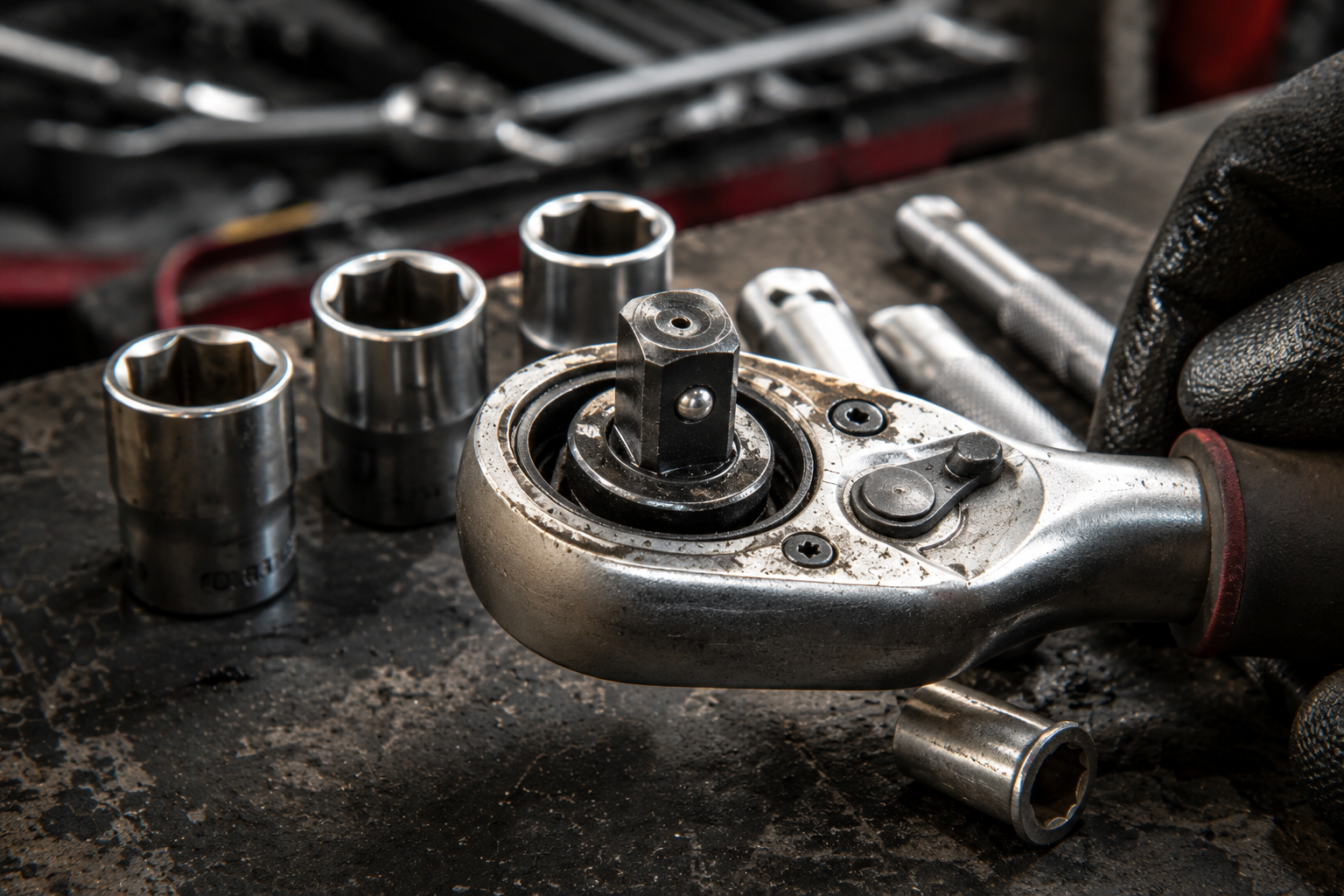
Every ratchet relies on a small gear mechanism inside the head to grip and release as you turn it. Over time, especially with heavy or daily use, those teeth wear down. Once the teeth round off or chip, the pawl (the small tooth that locks the gear in place) can't catch properly, and the ratchet slips instead of driving the bolt.
This is one of the most common reasons an older ratchet spanner starts underperforming, even if it looks fine on the outside. If you can feel the head "give" slightly before it engages, worn teeth are usually the culprit.
2. A Weak or Broken Pawl Spring
The pawl only works if it's held firmly against the gear by a small spring. If that spring weakens, breaks, or gets gunked up with dirt and old grease, the pawl won't seat properly. The result feels exactly like worn gear teeth—a hollow, slipping sensation—but the fix is different. Sometimes it's a simple spring replacement rather than a full ratchet swap.
3. Dirt, Rust, and Old Grease Inside the Head
Ratchets take a beating on job sites and in toolboxes, and grit, metal shavings, and old grease build up inside the mechanism. This gunk stops the pawl from moving freely, so it doesn't lock into the gear teeth the way it should. A quick strip-down, clean with degreaser, and a drop of fresh light oil solves this more often than people expect—before you assume the tool is dead.
4. Using the Wrong Size or Worn-Out Socket
Sometimes the ratchet itself is fine, and the problem is the connection point. A socket that's the wrong size, or one that's worn round on the inside, won't sit securely on the bolt head. Under load, it slips or cams out, and it can feel like the ratchet is at fault when it's actually the socket. Always check that your socket matches the fastener size exactly, and retire sockets once the corners start rounding off.
5. Applying Force in the Wrong Direction
Every ratchet spanner has a direction-selector switch. If it's set to loosen when you're trying to tighten (or vice versa), you'll get resistance followed by a slip as the mechanism does exactly what it's built to do—just not what you intended. It sounds obvious, but it's an easy thing to overlook mid-job, especially in awkward or low-visibility spots.
6. Overloading the Ratchet's Capacity
Every ratchet has a torque limit based on its size and build quality. Using a compact ratchet spanner on a bolt that really needs a breaker bar puts more strain on the internal gear than it's designed to handle. That extra stress accelerates wear on the teeth and pawl, leading to slipping even on a tool that's otherwise in good condition. Match the tool to the job, and step up to a longer-handled ratchet or breaker bar for stubborn, high-torque fasteners.
How to Prevent Ratchet Slip
- Clean and lightly oil the ratchet head every few months, more often if used daily
- Store ratchets somewhere dry to avoid internal rust
- Check sockets for rounding before each big job
- Don't use a small ratchet spanner for torque loads it wasn't built for
- Replace the pawl spring rather than the whole tool if slipping starts suddenly
When It's Time to Replace the Ratchet
If you've cleaned it, oiled it, and checked your sockets and direction switch and it's still slipping, the gear teeth or pawl are likely worn beyond a simple fix. At that point, a quality ratchet spanner with a fine-tooth mechanism will hold up far better under repeated use than trying to nurse a worn-out one along.
A reliable ratchet spanner shouldn't be something you have to think about mid-job. If yours keeps letting you down, it might be time to invest in one built for the work you're actually doing.
Leave a comment